Supporting argument 01
Severity Requires Evidence of Net Harm Reduction
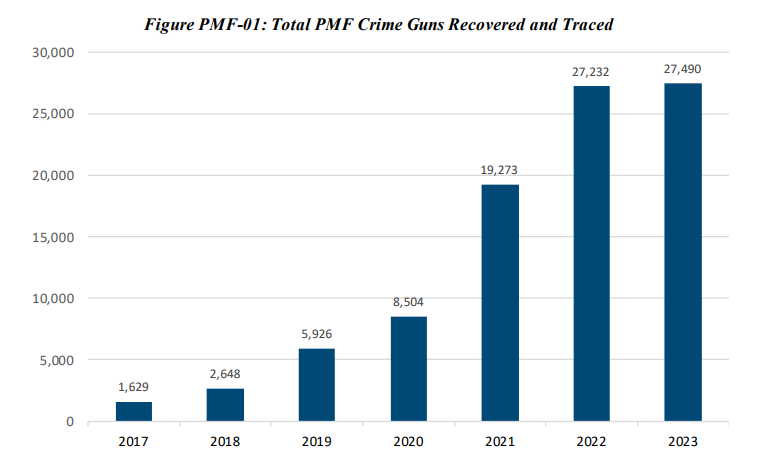
The possibility of grave harm may justify considering machine-level refusal, but the seriousness of a threat does not prove that automated blocking will reduce it. Forensic evidence confirms that 3D-printed firearm components can pose a real danger. Ducharme et al. report that “the most frequent 3DPF model received is a Glock-type frame which, once assembled, can perform as well as a commercial firearm” (Ducharme et al. 93). This finding establishes severity, but it does not establish that embedding restrictive algorithms in consumer printers will prevent weapons from being made.

Apply the proportionality test
Under the Proportionate Refusal Framework, consequentialist reasoning must evaluate the results of the intervention itself, including both its benefits and unintended harms. Schur notes that results-based moral judgments are difficult because most actions involve incomplete information both before the action and when its results are evaluated (Schur 51). A blocked file is not automatically a prevented weapon: users may alter geometry, divide a design into components, use uncontrolled printers, or choose another manufacturing method. Meanwhile, false positives may prevent lawful research, education, or repair. The consequences of both successful and mistaken refusals therefore matter.
Distinguish technical accuracy from social effect
Current detection studies show technical promise but not proven social effectiveness. Garland et al. describe their method as a “proof-of-concept approach for classifying firearm and non-firearm objects using geometric information extracted from g-code files” (Garland et al. 1621). Although their strongest model reached 95.80 percent accuracy in testing, a proof of concept does not demonstrate reliable performance against unfamiliar parts, modified files, or deliberate evasion. Joshi et al. likewise report preliminary results while admitting that “challenges persist in effectively managing false negatives” (Joshi et al. 1).

Meet the burden of proof before hard refusal
Before hard refusal is required, independent adversarial testing should measure false-positive, false-negative, and evasion rates separately and determine whether blocked users abandon harmful production or merely move elsewhere. It should also compare refusal with less restrictive interventions. The current evidence supports continued research and limited testing; it does not yet justify universal blocking. Ethical refusal requires proof of both serious harm and a reliable causal connection between the restriction and a meaningful reduction of that harm.